Search by topic
- archaeology
- Building of Local Interest
- chapel
- charity
- church
- crime
- dressmaker
- fire
- Great Eastern Railway
- Listed building
- Mapping Relief
- medieval
- oral history
- poverty
- Public House
- Religious House
- Roman
- scholar
- school
- Then and Now
- tudor
- women
- work
- world war one
- world war two
Search by text
“My Memoirs – Book One” – Early Life in the Fens by Levi Armsby
A memoir by Levi Armsby describing his early life in the Fenland village of Ten Mile Bank near Hilgay, Norfolk, including family, childhood, farming life and the landscape of the Great Ouse.
“My Memoirs – Book One”
This memoir by Levi Armsby records his early life growing up in the Fenland landscape around Ten Mile Bank and Hilgay.
It focuses on:
- Family background
- Childhood experiences
- Rural work and farming
- Life beside the River Great Ouse
(see title and introduction pages)
1. Family and origins
Armsby begins by setting out his family background.
He describes:
- His father, Robert Albert Armsby
- Extended family across Norfolk and beyond
- Relatives connected with farming and rural trades
This establishes a strong sense of:
- family networks rooted in Fenland life
(see early family sections)
2. The Fenland landscape
A central theme is the physical environment.
He describes:
- The River Great Ouse and its course
- Denver Sluice and drainage systems
- Flat, open Fenland terrain
The river is presented as:
- both a defining feature
- and a working landscape
(see description of the Great Ouse and surroundings)
3. Ten Mile Bank village life
The village of Ten Mile Bank is described in detail.
Features include:
- Cottages along the river bank
- Public houses and shops
- A school and local services
Distances and routes are carefully recorded, showing:
- the geography of everyday life
- connections to Hilgay and surrounding villages
(see village description section)
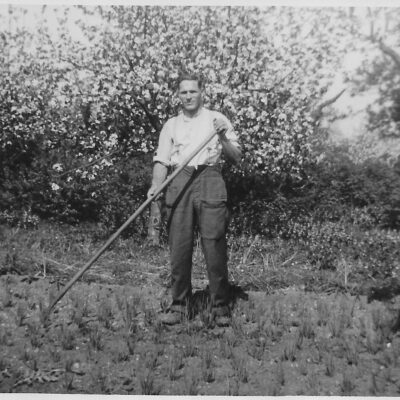
4. Farming and work
Rural labour is central to the memoir.
Armsby describes:
- Smallholdings and farming practices
- Crop work such as beans and vegetables
- Seasonal labour and hired workers
He recalls:
- tasks carried out by hand
- local workers such as “Jumbo” hired for harvest work
(see farming and labour sections)
5. Childhood experiences
Childhood is portrayed as active and sometimes hazardous.
Examples include:
- playing near rivers and sluices
- falling into deep water
- climbing buildings and exploring
These accounts reflect:
- freedom of movement
- risks of rural environments
(see childhood incident sections)
6. Community and neighbours
The memoir includes vivid descriptions of local people.
These include:
- neighbouring farmers
- workers and tradespeople
- extended family members
Relationships were:
- close-knit
- practical
- often centred around work
7. River and drainage systems
The management of water is a recurring theme.
Armsby describes:
- sluices and pumping engines
- drainage of Fenland fields
- the importance of water control
This highlights the engineered nature of the landscape.
(see Hunts Sluice and drainage references)
8. School life
Early schooling is described in detail.
Experiences include:
- learning letters using sand trays
- strict teaching methods
- memorable teachers such as “Daddy” Eldekin
He recalls:
- discipline
- singing lessons
- classroom routines
(see school sections)
9. Language and dialect
The memoir preserves elements of local speech.
Examples include:
- Norfolk dialect phrases
- everyday spoken expressions
These reflect:
- regional identity
- oral traditions
(see dialect section)
10. Work, learning and change
The memoir reflects on:
- traditional ways of working
- the arrival of machinery
- changing rural life
Armsby explicitly notes that:
these ways of life should not be forgotten
(see reflective passages)
Sources
- Manuscript
- Oral / Unpublished Sources
Contribute
Do you have any information about the people or places in this article? If so, then please let us know using the Contact page or by emailing capturingcambridge@
Licence
This work is licensed under CC BY-NC-SA 4.0