Search by topic
- archaeology
- Building of Local Interest
- chapel
- charity
- church
- crime
- dressmaker
- fire
- Great Eastern Railway
- Listed building
- Mapping Relief
- medieval
- oral history
- poverty
- Public House
- Religious House
- Roman
- scholar
- school
- Then and Now
- tudor
- women
- work
- world war one
- world war two
Search by text
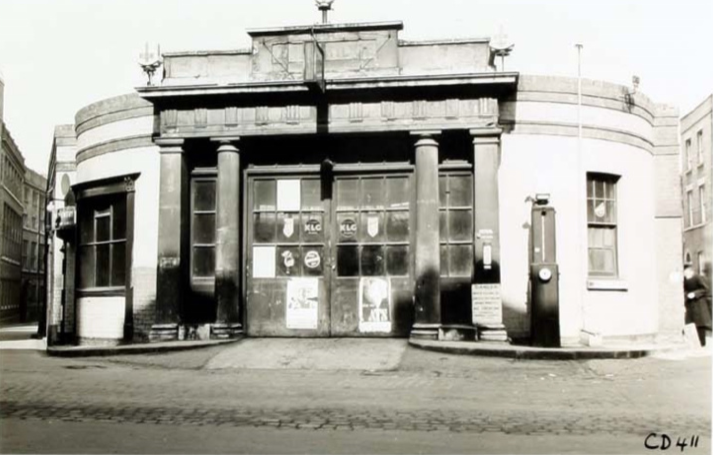 Old Corn Exchange building, Cambridge (Camb.Collection)
St Andrew’s Hill (Hog Hill) (Beast Market), Old Corn Exchange
History of St Andrew's Hill
St Andrew’s Hill had vanished under the Grand Arcade complex by the end of the 20th century.
It originally ran from opposite the Geological Museum in Downing Street NNW until it joined with St Tibb’s Row which continue almost due north towards the site of the old Post Office.
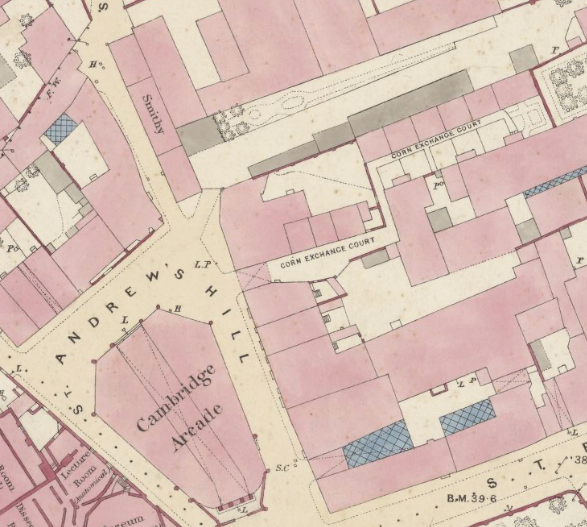
St Andrew’s Hill area 1886 OS Town Plan
1959 Royal Commission on Historical Monuments Survey of Cambridge
House no. 4 and shop no.3 and warehouse adjoining on the south, the last behind the premises of Messrs Barrett and Son, china and glass dealers, 25 St Andrew’s Street, the three forming a domestic’s and business unity…… Barrett’s warehouses in Jesus Lane were offered for sale as building materials in 1831 and R Barrett was ‘of St Andrew’s Hill’ in 1836. Probably therefore the present group was built c. 1830.
House no.7 …. was built in the 18th or early in the 19th century…
Houses, nos. 9 and 10, on the corner of Tibb’s Row and extending towards Corn Exchange Street …. the plan suggests a 16th-century origin. the earliest of the additions to the W is of c. 1700. The wing, probably once a separate building, is of the 17th century. The whole was remodelled and the main range refronted early in the 19th century, probably by Charles Humfrey and in 1818 when the ownership of the land on which two porches were being built was in dispute. Humfrey evidently established his right, for the porches survive and the space between them is enclosed by railings.
The Grand Arcade excavation report (2019) p.291 has some very interesting commentary on the Plot XXII which lay behind nos. 22-26 St Andrew’s Street and fronted onto St Andrew’s Hill.
Throughout the medieval and post-medieval periods Plot XXII had remained a largely open area. This began to change in the late seventeenth and eighteenth centuries (see above), but it was in the nineteenth century that this situation altered fundamentally and Plot XXII became one of the most archaeologically ‘active’ areas in the street block. This was primarily because its lack of earlier development meant that when pressures on space increased during the nineteenth century it presented a significant opportunity, paralleled only by the large garden area that was developed by Robert Sayle (below). The Purchas family continued to own at least part of Plot XXII until 1829, although their fortunes were in decline, and by 1830 the plot was rather more densely built-upon than in the late eighteenth century but not fundamentally altered. The only archaeological feature of c. 1800–30 was brick-lined Well 55. The plot then came into the hands of two local spinsters, Misses Mary Ann and Sophia Bones, who died at some point between 1841 and 1851. In c. 1830–45 and probably c. 1844–5 the area was transformed, and although the Cock Inn continued to exist it shrank and lay outside the investigated area. It is unclear whether this change took place under the aegis of the Bones sisters, although it is perhaps more likely that it took place under their successors who may have been the Barrett family.
See 7 St Andrew’s Hill and 25 St Andrew’s Street.
1665
Samuel Newton recorded in his diary, 3 April 1665, seeing a comet at three in the morning as he was rising early to go to Hog’s Hill.
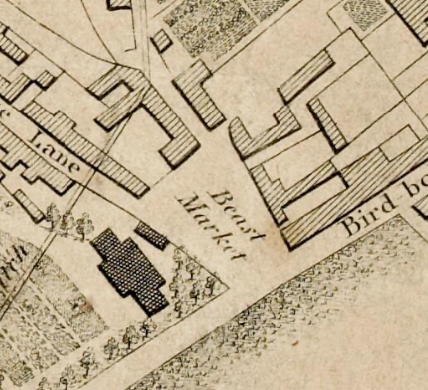
Custance map of Cambridge, 1798, St Andrew Hill area
1842:
Old Corn Exchange building, Cambridge (Camb.Collection)
The Corn Exchange was in use for 34 years when a much larger one was built behind the Guildhall. It then became a small shopping centre of 20 shops. In 1894 the shops were forced to close by a ‘Depression. For two years it was a theatre, then from 1896 to 1914 it was a bicycle shop. After WWI it became a garage, as shown in the photo, until its destruction in 1961 for a Police Car park.
1876
A rollerskating rink was opened in the old Corn Exchange.
1890s
Enid Porter writes in Cambridgeshire Customs and Folklore p.248:
For a short time in the 1890s the old Corn Exchange on St Andrew’s Hill, which had been used as a shopping arcade following the opening of the new Corn Exchange in 1874, was used as a theatre known as the Arcadia Entertainment Hall.
In the 1890s the rear of Corn Exchange Court was used by Thomas Newton who had a carpenter, glazier, painter workshop, and William Chapman who was a carpenter and undertaker. The cottages remained but their internal divisions had been removed.
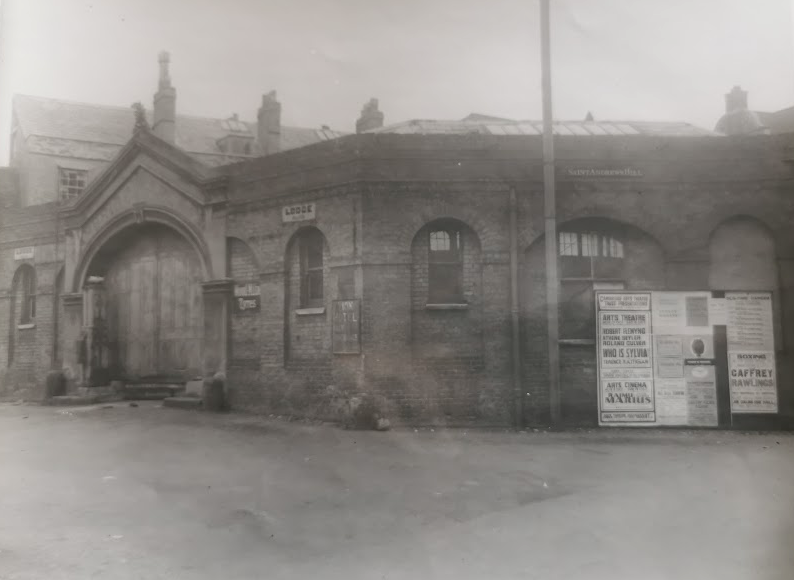
H Liddiard garage, Downing Street (MoC12.51)
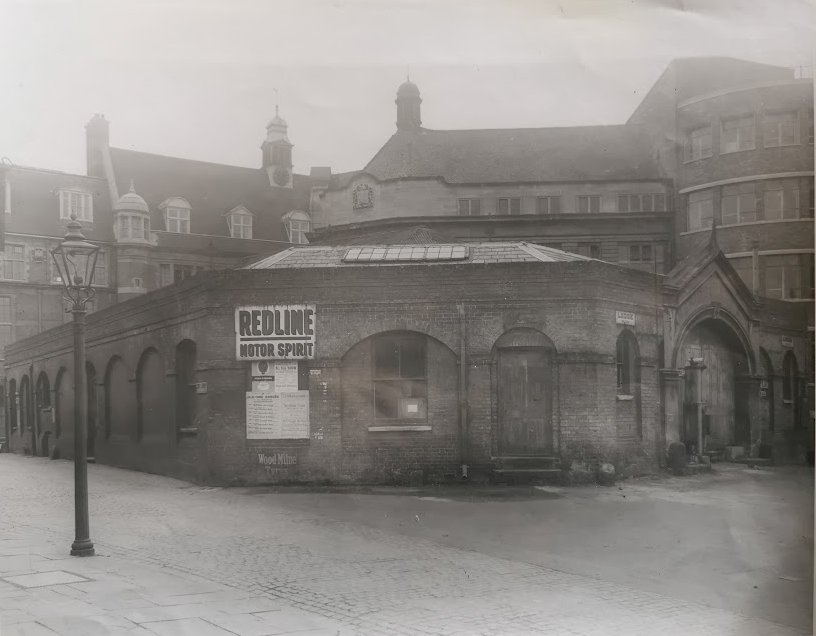
H Liddiard garage, Downing Street (MoC12.61)
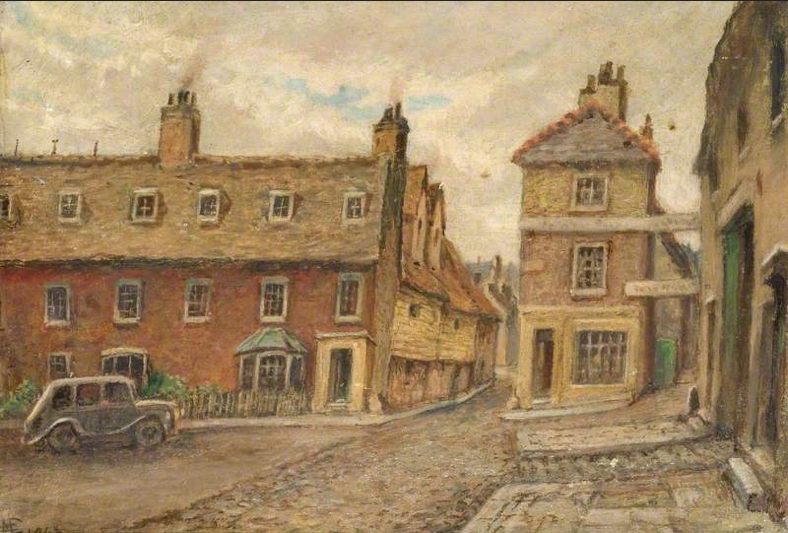
St Andrew’s Hill, Mary C Greene (MoC)
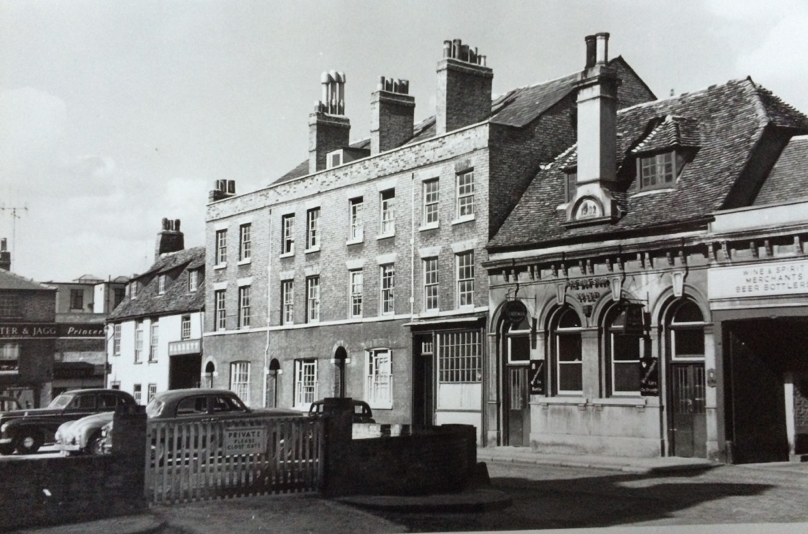
St Andrew’s Hill: Whitmore & Co and The Bun Shop
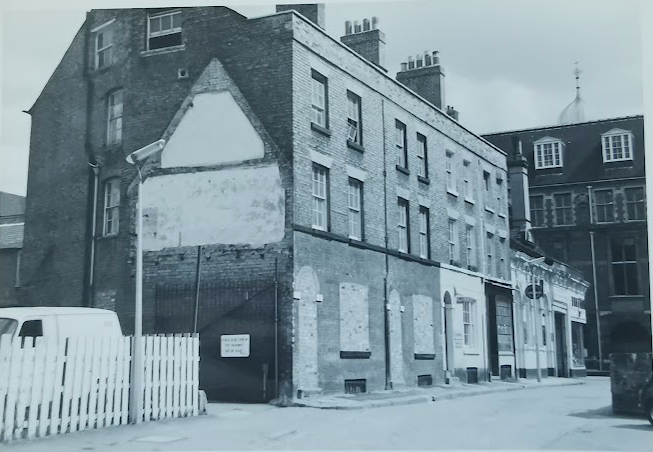
St Andrew’s Hill (MoC165/71)
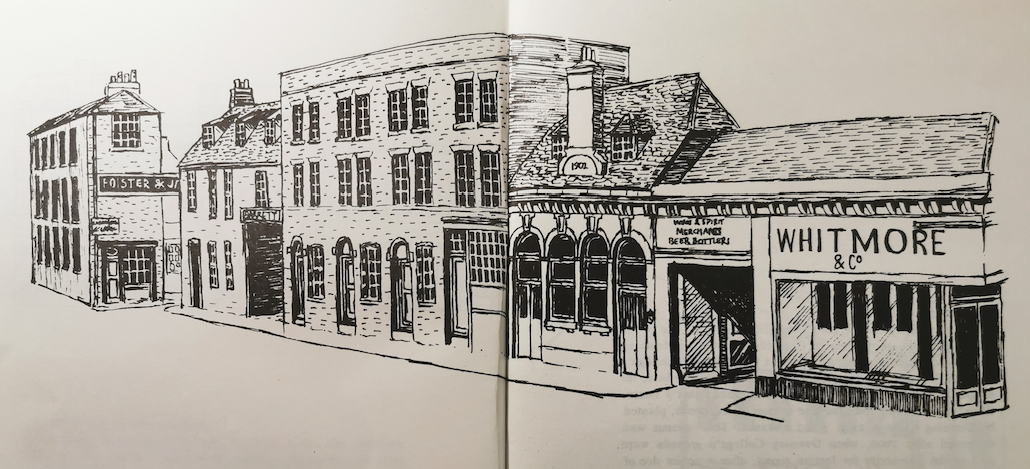
The East Side of St Andrew’s Hill: drawing by Slim Smith from The Lion Yard (1974)
The Lion Yard by Henry Bosanquet (1974) notes the following on this illustration based on the above photo:
On the corner is “the Bun Shop”, dated on the chimney. Next is an early 19th century terrace of four houses, of special interest because of the original shop front in one. All four were ‘listed’ historic buildings.These were the best dwelling-houses to be built on St Andrew’s Hill. …. The houses looked west over the beautiful University Botanic gardens, to the south was the large Swinecroft Common. On the hill itself the the beast market was held – its ancient name was ‘Hog Hill.’….. But in the early 19th century the two sided ‘square’ began to go downhill. In the 1820s the Parish Workhouse was built, the long range with the Foister’s sign.
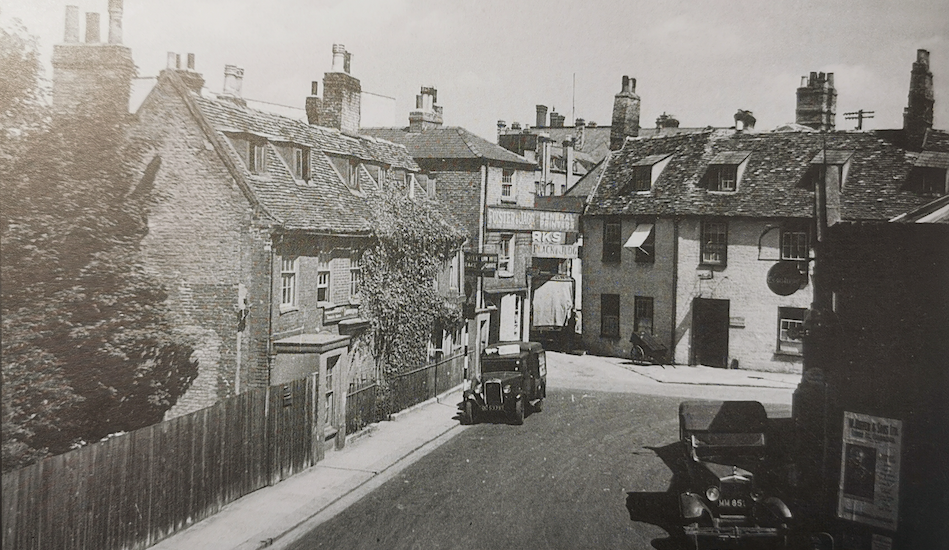
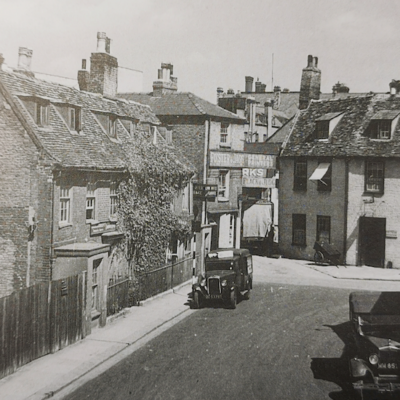
St Andrew’s Hill, 1937 (photo J Baldwin)
On the right is the rear of the old Corn Exchange. It was used as a shopping centre until 1884. When this failed, Ernie Hayward opened it as a music hall. It then became a garage. (Vanishing Cambridge, Mike Petty)
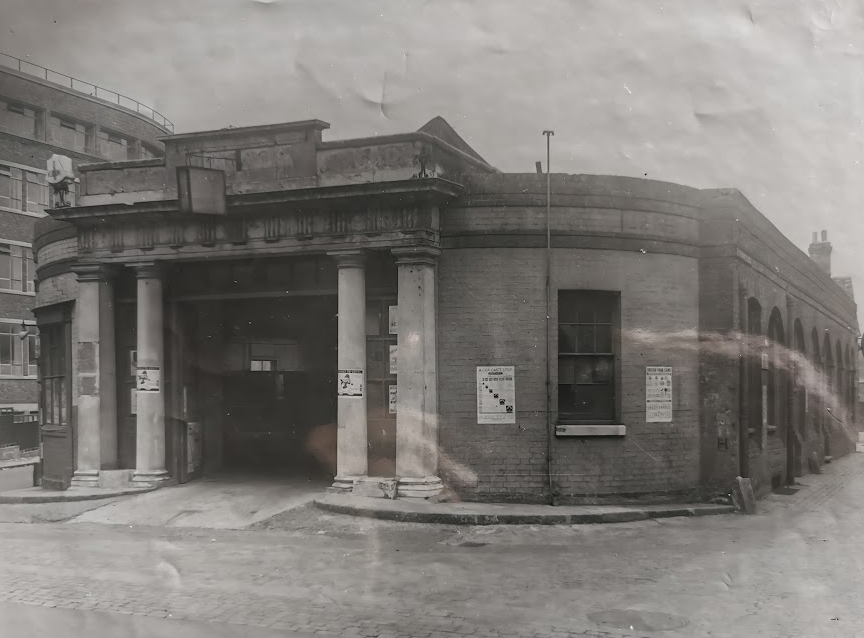
Old Corn Exchange (MoC)
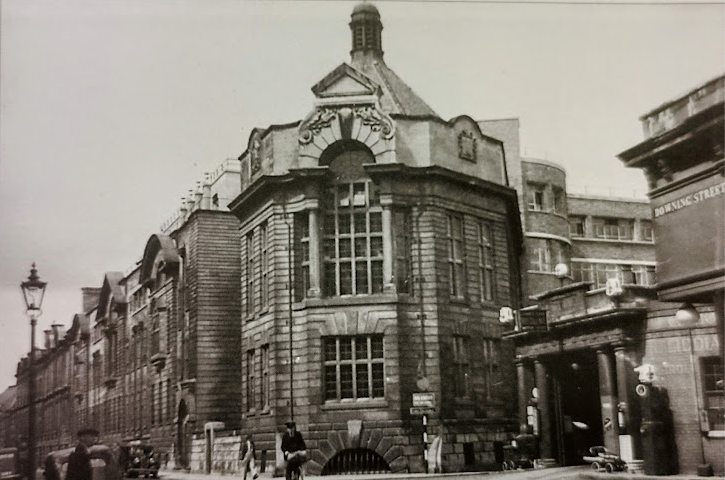
Downing Street with Liddiard’s garage, the old Corn Exchange, in 1939 (Cambridgeshire Collection)
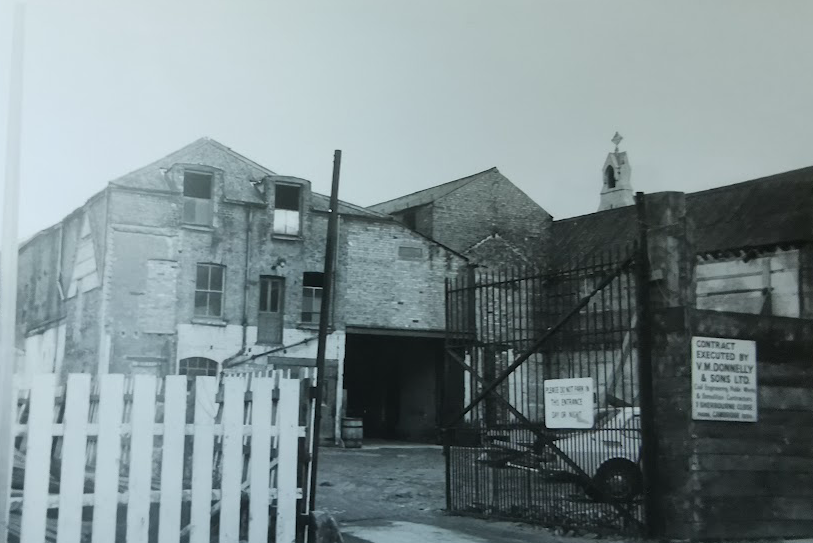
St Andrew’s Hill (MoC61/72)
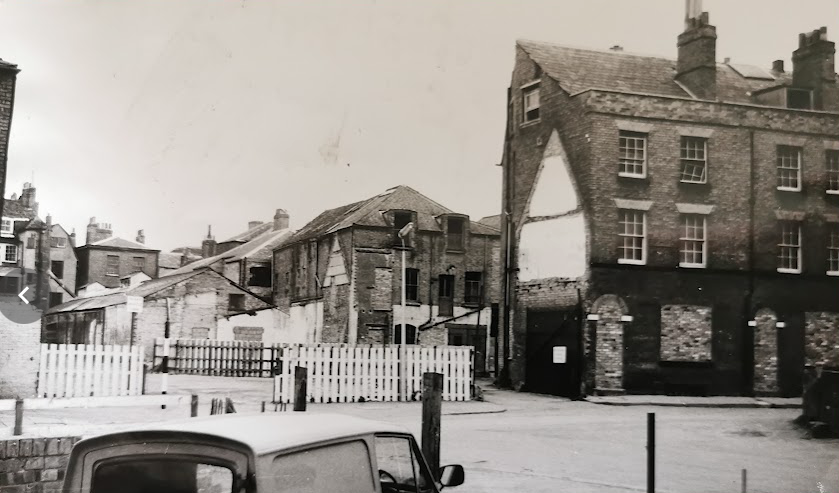
St Andrew’s Hill (MoC PB138.82)
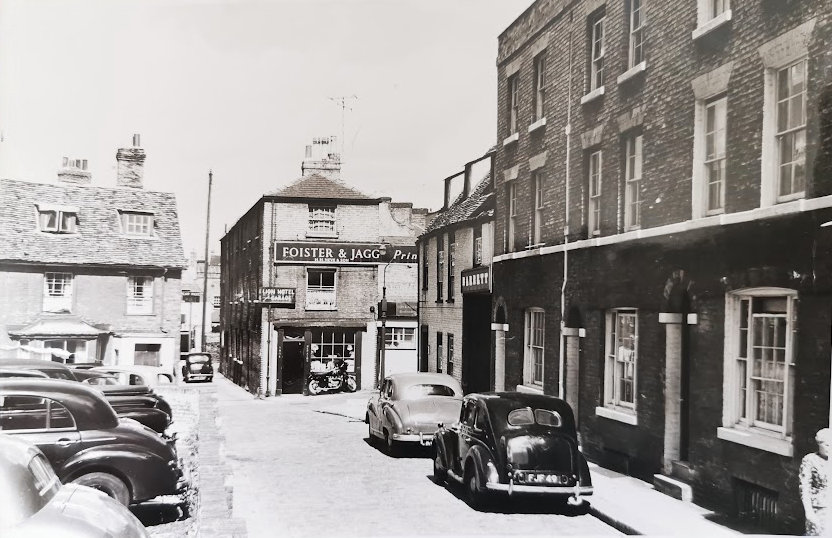
St Andrew’s Hill 1960, (MoC32/60)
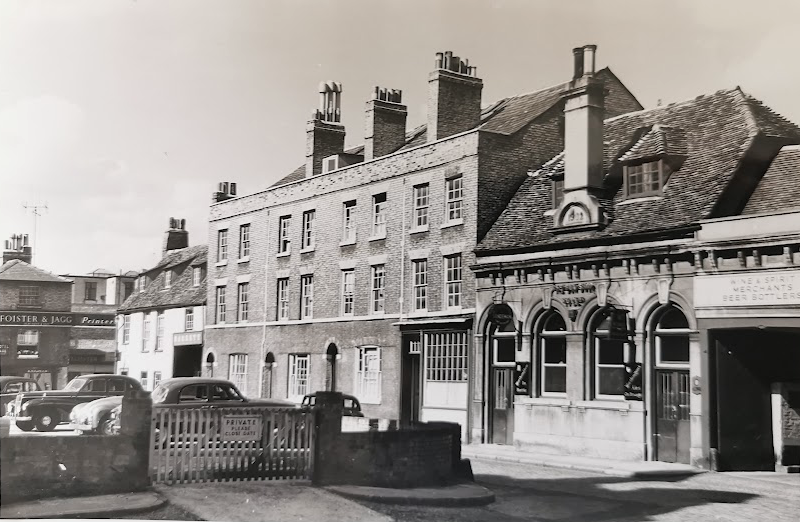
St Andrew’s Hill (MoV27/60)
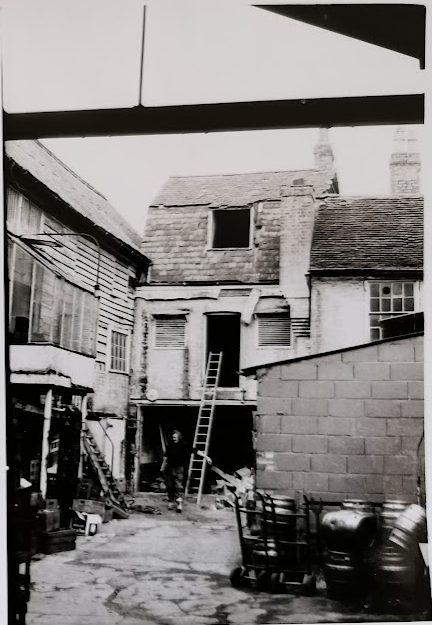
St Andrew’s Hill, 1972, back of Whitmores (MoC60/72)
1851 census
(unnumbered) Charles Henry Careless, 30, college servant, b Hampshire
Emily E, 28, b Essex
Robert, 3, b Middlesex
Annie Jane Flora, 1, b Cambridge
Mary Dawson, 18, servant, b Elsworth
Ellen Wishey, 16, servant, b Cambridge
William W Haggis, lodger, 24, college cook, b Cambridge
Charles Henry died July 1854 aged 34. He was son of James Careless.
1861
(1) Whitesmith shop
(2) Andrew Phillips, 59, innkeeper, b Essex
(3 & 4) Robert Barrett, 34, china dealer, b Ely
(5) Mary Ann Kitteridge, 42, inn keeper, b Cambridge
(6) vacant
(7) Richard Wilson, 49, clergyman no cure private tutor, b Yorks
(8) shop
(9) Arthur C Barrett, 44, private tutor, b Suffolk
(10) Harriett A D Thorn, 40, school mistress, b Southend Essex
(11) Charles Warland, 39, cellarman, b Cottenham
(12) Martha Scarr, 46, sempstress, b Essex
(13) Elizabeth Adson, 50, grocer, b Northants
1913: Kellys
Old Corn Exchange Building:
Foster & Jagg, printers and publishers
Henry Liddiard, cycle and motor depot
East Side:
(1) Whitmore and Co, wine spirit and ale merchants
The Bun Shop saloon and retail bars
(3) R Barrett and Son, earthenware, china, glass and hardware merchants
(4) Herbert Dye Froment, head porter Clare College
(5) Mrs L Hobson, lodging house keeper
(6) Albert Edward Hunting, carpenter
Mrs E Hunting, lodging house keeper
Corn Exchange Court:
Barrett and Son, china, earthenware and hardware merchants
Barrett’s Cottages:
Stables: Knaster and Cox motor garage
(7) Cox and Allen, bookbinders etc
A Cox, advertising agent
(8) Summers and Sons, motor builders
Stable and warehouse, Flack and Judge
Artistic Sign Union
West Side:
(9) Papworth and French solicitors
Major Oliver Papworth, councillor of the Borough
North Side:
(9) Frederic W French, secretary Victoria Friendly Societies’ Asylum
Percy Albert French
(10) Mrs Elizabeth Scott
1937
EAST SIDE
(1) Whitmore & Co, wine and spirit merchants
(3) Warwick S and Son, fine art dealers
(4) Barrett and Son, china and glass dealers
CORN EXCHANGE COURT
(7) Cox and Allen, bookbinders; Foister and Jagg printers; Cambridge Town Football Club (H.H. Neve sec.)
(8a) Daniel Wilsher, boot repairer
NORTH SIDE
Truman and Knightly Ltd, scholastic agents
1962: Kellys
East Side:
(1) The Bun Shop
(3) Barrett and Son, wholesale and retail glass
(4) Miss Dodd
(5) Mrs L Hobson
Corn Exchange Court:
Barrett and Son, wholesale and retail glass, china and hardware
(7) W S Thatcher, private tutor
(7) Elias and Co stock brokers
A Sidney Campkin and Sons, photographic apparatus
Matthew and Son Ltd
(8a) Speedy Shoe Repair
Projects
Contribute
Do you have any information about the people or places in this article? If so, then please let us know using the Contact page or by emailing capturingcambridge@
Licence
This work is licensed under CC BY-NC-SA 4.0